뉴스

회사 소식 When Should You Replace a Filter Cartridge? Understanding Differential Pressure and Real Service Life

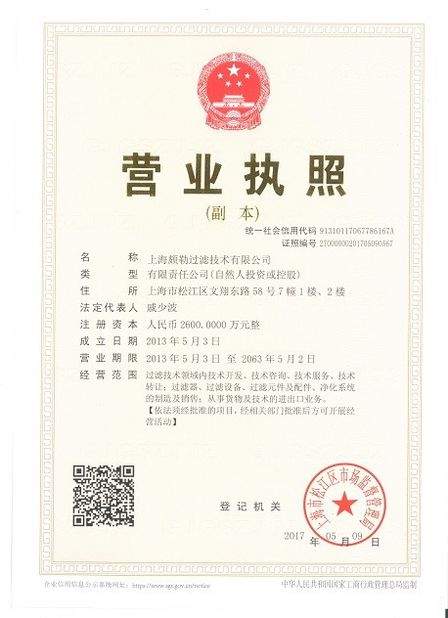
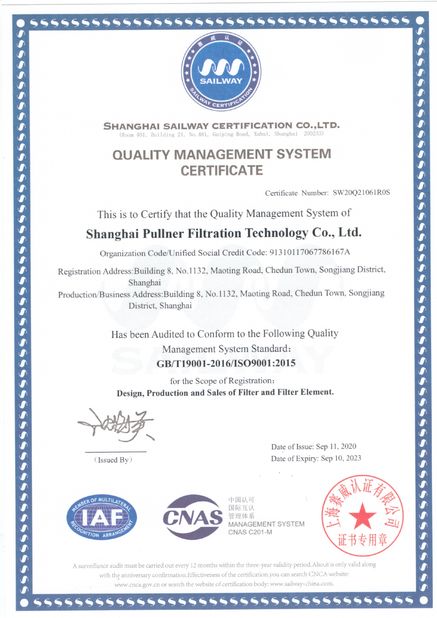
인증
중국 Shanghai Pullner Filtration Technology Co., Ltd. 인증
고객 검토
우리는 칠면조의 가장 큰 식품 공장 중 하나에서 필터를 사용합니다. 우리는 역삼투 전치 필터링으로 씁니다, 당신의 제품에 매우 만족합니다, 미스 루시가 상당히 우리를 도왔고 매우 빠른 반환을 우리의 문제에게 제공했습니다. 우리는 루마니아에서 신설 공장에서 그것을 사용할 것입니다, 내가 물어보세요 우리의 고객들에게 또한 그것을 추천합니다.

—— 호세

PULLNER는 좋은 동업자입니다. 알맞은 가격, 제일 서비스를 가진 좋은 제품, 우리는 5년 이상 협력했습니다.

—— nisa

저희 시설에서는 Pullner의 PP 캡슐 필터를 사전 필터로 상류에 설치했습니다. 이는 안정적인 여과를 제공하고, 후속 공정 부하를 줄이며, RO 작동을 원활하게 지원합니다. 또한 Miss Lucy의 신속한 의사소통과 문제 해결 능력에 감사드립니다. 덕분에 전체 과정이 수월했습니다. 이 제품을 계속 사용하고 인도 고객에게 추천할 것입니다.

—— Shubh

풀너의 높은 흐름 필터 카트리지는 좋은 품질을 가지고, 우리는 그들을 많이 사용하고 주로 발전소 물 필터링에 적용됩니다. 카트리지는 강한 기계적 강도와 신뢰할 수있는 성능을 보여줍니다.우리는 앞으로도 풀너와 함께 일할 것입니다.

—— 토마스 랄

저희는 풀너 팀과 3년 동안 협력해 왔습니다. 저희 회사는 수처리용으로 풀너 고유량 필터 카트리지와 스트링 와운드 필터 카트리지를 사용하고 있으며, 매우 좋은 필터입니다.

—— 알렉스 렐

저는 풀너 필터를 1년 동안 사용하다가 풀너 회사에서 만났습니다. 우리는 앞으로도 계속 일할 것이다

—— 리달 필러

제가 지금 온라인 채팅 해요
회사 뉴스
When Should You Replace a Filter Cartridge? Understanding Differential Pressure and Real Service Life
에 대한 최신 회사 뉴스 When Should You Replace a Filter Cartridge? Understanding Differential Pressure and Real Service Life
When Should You Replace a Filter Cartridge? Understanding Differential Pressure and Real Service Life
Filter Cartridge Life Should Not Be Judged by Time Alone

In many industrial filtration systems, filter cartridges are replaced according to a fixed schedule: every week, every month, or after a certain number of production batches.

This approach is convenient, but it is not always technically correct.

The actual service life of a filter cartridge depends on contaminant concentration, flow rate, fluid viscosity, filter area, micron rating, operating pressure, and the structure of the filter media. Even two identical cartridges installed in similar production lines may have very different service lives.

A more practical indicator is differential pressure, often written as ΔP.

What Is Differential Pressure Across a Filter?

Differential pressure is the pressure difference between the inlet and outlet of a filter housing.

For example, if the inlet pressure is 3.0 bar and the outlet pressure is 2.8 bar, the differential pressure is:

ΔP = 3.0 - 2.8 = 0.2 bar

When a new cartridge is installed, the differential pressure is normally relatively low. As particles accumulate inside or on the surface of the filter media, flow resistance increases and the differential pressure gradually rises.

This makes ΔP one of the most useful indicators of filter loading.

A Realistic Example from a Beverage Water Filtration Line

Consider a beverage plant using a 5 μm polypropylene cartridge after an activated carbon tank.

Immediately after installing new cartridges, the system may operate at:

  • Inlet pressure: 2.8 bar
  • Outlet pressure: 2.6 bar
  • Differential pressure: 0.2 bar

After several days of operation, fine activated carbon particles and suspended solids begin accumulating in the cartridges.

The readings may change to:

  • Inlet pressure: 3.0 bar
  • Outlet pressure: 2.3 bar
  • Differential pressure: 0.7 bar

Several days later, the differential pressure may reach 1.2 bar or higher.

At this stage, the cartridges may still appear structurally intact, but the filtration system is already experiencing significantly higher resistance. Flow may decrease, pumps may work harder, and production capacity may be affected.

This is why simply looking at the cartridge or counting operating days does not provide enough information.

Why High Differential Pressure Can Become a Problem

As differential pressure continues to increase, several problems may occur.

First, the system flow rate may fall below the required production rate. This is particularly important in beverage, chemical, and water-treatment systems where stable flow is necessary for downstream equipment.

Second, excessive differential pressure can mechanically stress the filter cartridge. Pleated media may deform, support layers may collapse, or seals may become damaged if the cartridge is operated beyond its recommended limits.

Third, higher resistance can increase energy consumption because the pump must generate more pressure to maintain the same flow.

Therefore, a heavily loaded filter should not be considered “more efficient" simply because it is capturing more dirt. At some point, continued operation becomes economically and mechanically inefficient.

Is There a Standard Differential Pressure for Cartridge Replacement?

There is no single replacement differential pressure suitable for every cartridge.

The correct limit depends on the filter design, media material, housing configuration, operating temperature, and manufacturer recommendations.

In many liquid filtration applications, operators may begin considering replacement when differential pressure reaches approximately 1.0 to 2.0 bar, but this should never be treated as a universal rule.

For membrane cartridges used in critical pharmaceutical or final filtration applications, the acceptable operating conditions may be very different from those of polypropylene depth filters used for general water pretreatment.

Always check the maximum recommended differential pressure for the specific cartridge.

Initial Differential Pressure Also Matters

Engineers often focus only on the final replacement pressure, but the initial ΔP of a clean filter is equally important.

Suppose two 1 μm cartridges are tested at the same flow rate.

Cartridge A has an initial differential pressure of 0.15 bar.

Cartridge B has an initial differential pressure of 0.55 bar.

If both cartridges are replaced at 1.5 bar differential pressure, Cartridge A has much more usable pressure-drop capacity before reaching the replacement point.

This usually means longer operating life, assuming their filtration efficiency and dirt-holding characteristics are comparable.

A lower clean differential pressure is therefore often a sign of better hydraulic performance.

Why Increasing the Number of Cartridges Can Extend Service Life

Another practical solution to frequent cartridge replacement is increasing the total filtration area.

Imagine a system processing 20 m³/h of water through five 40-inch cartridges. Each cartridge effectively handles about 4 m³/h.

If the same flow is distributed across ten cartridges, the flow per cartridge decreases to approximately 2 m³/h.

Lower flow velocity usually reduces pressure drop and can improve dirt-holding performance. In applications with high particle loading, this can significantly extend the cartridge replacement interval.

However, increasing cartridge quantity also requires a larger housing and higher initial investment. Good filter system design therefore involves balancing capital cost against cartridge consumption, maintenance frequency, and downtime.

A Rapidly Rising ΔP Can Indicate an Upstream Problem

Differential pressure can also help diagnose process problems.

For example, if cartridges normally last four weeks but suddenly reach the replacement pressure within three days, replacing the cartridges alone may not solve the real problem.

Possible causes could include:

  • Activated carbon escaping from an upstream carbon vessel
  • Abnormal sediment entering the water supply
  • Pretreatment filter failure
  • Process contamination
  • Incorrect valve operation
  • A sudden increase in production flow
  • Using a finer micron rating than necessary

In such cases, the filter cartridge is behaving like an early-warning device.

Monitoring the rate of differential-pressure increase can provide valuable information about the condition of the entire filtration system.

The Best Replacement Strategy Combines Several Parameters

A professional cartridge replacement strategy should consider more than operating time.

Useful indicators include differential pressure, actual flow rate, product quality, microbiological requirements, cartridge integrity, production schedule, and the maximum allowable pressure specified by the manufacturer.

For non-critical particle filtration, differential pressure and flow are often the main indicators.

For pharmaceutical, food and beverage, and high-purity applications, replacement decisions may also depend on sanitation cycles, batch records, validation requirements, or microbial control.

Better Monitoring Can Reduce Filter Consumption

Replacing cartridges too early wastes filter capacity and increases operating cost. Replacing them too late can reduce production flow, increase energy consumption, or damage the filter element.

The most economical approach is to understand how the filter behaves under real operating conditions and establish a replacement point based on measurable data.

Pullner Filter supplies pleated filter cartridges, polypropylene depth filters, membrane cartridges, and stainless-steel filter elements for industrial liquid filtration systems. Filter selection can be optimized according to flow rate, differential pressure, contaminant loading, operating temperature, and application requirements.

For industrial filter cartridge solutions and technical support, visit pullnerfilter.com.

선술집 시간 : 2026-08-25 09:52:53 >> 뉴스 명부
연락처 세부 사항
Shanghai Pullner Filtration Technology Co., Ltd.

담당자: Miss. Lucy

전화 번호: 86-21-57718597

팩스: 86-021-57711314

회사에 직접 문의 보내기 (0 / 3000)