뉴스

회사 소식 What Is a String Wound Filter Cartridge and How Does It Work?

인증
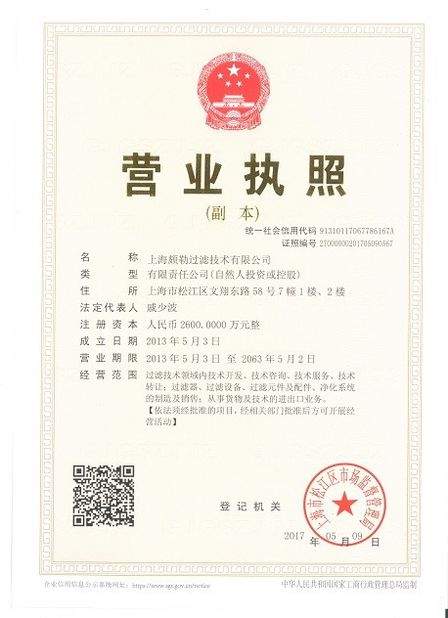
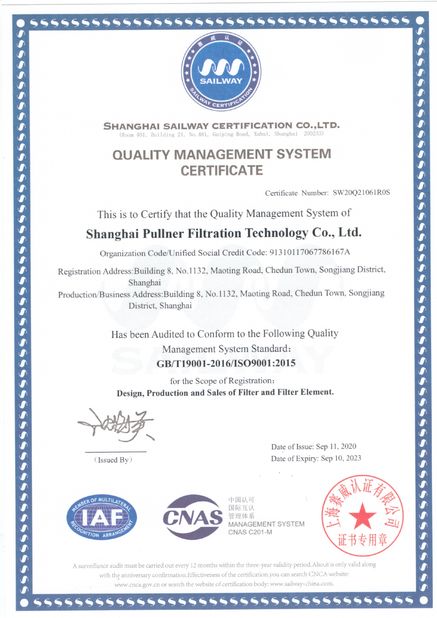
중국 Shanghai Pullner Filtration Technology Co., Ltd. 인증
고객 검토
우리는 칠면조의 가장 큰 식품 공장 중 하나에서 필터를 사용합니다. 우리는 역삼투 전치 필터링으로 씁니다, 당신의 제품에 매우 만족합니다, 미스 루시가 상당히 우리를 도왔고 매우 빠른 반환을 우리의 문제에게 제공했습니다. 우리는 루마니아에서 신설 공장에서 그것을 사용할 것입니다, 내가 물어보세요 우리의 고객들에게 또한 그것을 추천합니다.

—— 호세

PULLNER는 좋은 동업자입니다. 알맞은 가격, 제일 서비스를 가진 좋은 제품, 우리는 5년 이상 협력했습니다.

—— nisa

저희 시설에서는 Pullner의 PP 캡슐 필터를 사전 필터로 상류에 설치했습니다. 이는 안정적인 여과를 제공하고, 후속 공정 부하를 줄이며, RO 작동을 원활하게 지원합니다. 또한 Miss Lucy의 신속한 의사소통과 문제 해결 능력에 감사드립니다. 덕분에 전체 과정이 수월했습니다. 이 제품을 계속 사용하고 인도 고객에게 추천할 것입니다.

—— Shubh

풀너의 높은 흐름 필터 카트리지는 좋은 품질을 가지고, 우리는 그들을 많이 사용하고 주로 발전소 물 필터링에 적용됩니다. 카트리지는 강한 기계적 강도와 신뢰할 수있는 성능을 보여줍니다.우리는 앞으로도 풀너와 함께 일할 것입니다.

—— 토마스 랄

저희는 풀너 팀과 3년 동안 협력해 왔습니다. 저희 회사는 수처리용으로 풀너 고유량 필터 카트리지와 스트링 와운드 필터 카트리지를 사용하고 있으며, 매우 좋은 필터입니다.

—— 알렉스 렐

저는 풀너 필터를 1년 동안 사용하다가 풀너 회사에서 만났습니다. 우리는 앞으로도 계속 일할 것이다

—— 리달 필러

제가 지금 온라인 채팅 해요
회사 뉴스
What Is a String Wound Filter Cartridge and How Does It Work?
에 대한 최신 회사 뉴스 What Is a String Wound Filter Cartridge and How Does It Work?
What Is a String Wound Filter Cartridge and How Does It Work?

SEO Keywords: string wound filter cartridge, wound filter cartridge, depth filtration, industrial water filtration, chemical filtration, pre-filtration cartridge, sediment filter cartridge, Pullner filter cartridge
Publisher: Pullner
Website: www.pullnerfilter.com

A string wound filter cartridge, also called a wound filter cartridge, is a typical depth-type filtration element used for the removal of suspended solids from liquids. It is widely applied in industrial water treatment, chemical processing, power generation, plating, oil and gas, food and beverage pre-filtration, and general process liquid filtration.

Compared with surface-type filter elements, a string wound cartridge is designed to retain particles not only on the outer surface, but also within the internal depth of the wound yarn structure. This makes it especially suitable for applications where the liquid contains sand, rust, sediment, scale, colloidal particles, or other suspended impurities with a relatively high particle load.

1. Structural Principle of a String Wound Filter Cartridge

A string wound filter cartridge is mainly composed of two parts: the filter yarn and the central support core.

The filter yarn forms the active filtration layer. Common yarn materials include polypropylene, cotton, glass fiber, and polyester. The selection of yarn material depends on the chemical properties of the fluid, operating temperature, filtration target, and cleanliness requirement.

The central core provides mechanical support and maintains cartridge stability during operation. Common core materials include polypropylene, stainless steel, and galvanized steel. Polypropylene cores are commonly used for general water and chemical filtration. Stainless steel cores are often selected for higher temperature or higher mechanical strength requirements.

에 대한 최신 회사 뉴스 What Is a String Wound Filter Cartridge and How Does It Work?  0

During manufacturing, the yarn is wound around the core under controlled tension and a specific winding angle. The winding pattern forms a multilayer three-dimensional filtration structure. In a well-designed wound cartridge, the outer layers usually have relatively larger flow channels, while the inner layers become progressively denser. This graded structure allows larger particles to be captured in the outer region and finer particles to be retained deeper inside the cartridge.

This is the main difference between a wound filter cartridge and a simple screen or surface filter.

2. Filtration Mechanism

The working mechanism of a string wound filter cartridge is based on depth filtration.

When liquid enters the filter housing, it normally flows from the outside of the cartridge toward the inner core. As the liquid passes through the wound yarn layers, suspended particles are removed through several mechanisms, including mechanical interception, pore restriction, particle bridging, and deposition within the depth of the filter matrix.

Large particles are usually trapped near the outer layers. Smaller particles may move deeper into the cartridge before being retained by narrower channels or by accumulated particle layers. As filtration continues, the retained particles gradually increase the flow resistance, leading to a rise in differential pressure.

A properly selected wound filter cartridge should provide a balance between particle retention, dirt-holding capacity, flow rate, and pressure drop. If the micron rating is too fine for the inlet particle load, the cartridge may block too quickly. If the micron rating is too coarse, downstream equipment or final filters may not be adequately protected.

3. Nominal Filtration Rating

Most string wound filter cartridges are considered nominal-rated filters. This means that the stated micron rating represents a general particle removal level under specific test or operating conditions, rather than an absolute guarantee that all particles larger than the stated size will be removed.

Common nominal ratings include 1 μm, 3 μm, 5 μm, 10 μm, 20 μm, 30 μm, 50 μm, 75 μm, and 100 μm.

In practical industrial applications, the actual filtration performance is influenced by many factors, such as particle shape, particle concentration, liquid viscosity, flow rate, operating pressure, temperature, and the physical structure of the wound yarn. Therefore, filter selection should not rely only on the micron rating. The complete working condition should be evaluated before choosing the cartridge.

4. Material Selection and Chemical Compatibility

Material compatibility is one of the most important factors in selecting a string wound filter cartridge.

Polypropylene wound cartridges are widely used because of their good chemical resistance, low cost, and suitability for many water and general chemical applications. They are commonly selected for industrial water treatment, chemical pre-filtration, plating solution filtration, and wastewater pretreatment.

Cotton wound cartridges may be used in some low-temperature applications where natural fiber media are acceptable. However, chemical compatibility and potential fiber release should be considered carefully.

에 대한 최신 회사 뉴스 What Is a String Wound Filter Cartridge and How Does It Work?  1

Glass fiber wound cartridges are often used in higher temperature applications or where certain chemical resistance properties are required. They can provide good thermal stability, but the fluid compatibility should still be confirmed.

Polyester wound cartridges can be used in selected industrial liquids where polyester offers suitable mechanical and chemical performance.

The core material should also be selected according to the process condition. For ordinary water and many chemical liquids, a PP core is often sufficient. For higher temperature, higher pressure, or more demanding mechanical conditions, a stainless steel core may be more suitable.

5. Main Applications

String wound filter cartridges are commonly used as pre-filtration elements. Their main function is to remove coarse and medium-sized suspended solids before the liquid reaches pumps, valves, membranes, ion exchange resins, activated carbon beds, or final precision filters.

Typical applications include:

  • Industrial water pretreatment, including removal of sediment, rust, sand, and pipe scale.
  • Chemical process filtration, where suspended particles must be reduced before the next production step.
  • Plating solution filtration, where metallic particles and process residues need to be controlled.
  • Power plant water filtration, including condensate, cooling water, and auxiliary water systems.
  • Food and beverage pre-filtration, where coarse impurities need to be removed before finer filtration stages.
  • Oilfield and general industrial liquid filtration, where robust and economical pre-filtration is required.

In many systems, wound cartridges are not used alone. They are often combined with melt-blown filters, pleated filters, bag filters, or membrane filters to form a staged filtration system.

6. Advantages of String Wound Filter Cartridges

The main advantage of a string wound filter cartridge is its depth-loading capacity. Because particles can be retained throughout the filter depth, the cartridge can handle higher impurity loads than many simple surface filters.

Another advantage is cost efficiency. For many pre-filtration applications, using a wound filter cartridge can reduce the load on downstream fine filters, extend final filter service life, and lower overall replacement cost.

String wound cartridges also have relatively good mechanical strength when properly manufactured. The wound structure, combined with a suitable central core, allows the cartridge to maintain shape and stability under normal operating conditions.

In addition, the product can be customized in terms of length, micron rating, yarn material, core material, outer diameter, and end configuration, making it adaptable to many industrial filter housings.

7. Limitations and Selection Considerations

Although wound filter cartridges are reliable and economical, they are not suitable for every filtration requirement.

For applications requiring high precision, absolute-rated filtration, bacterial retention, or very low extractables, pleated membrane cartridges or high-purity filters may be more appropriate.

For fluids with very high viscosity, high solid concentration, or rapidly changing particle load, the flow rate and pressure drop should be carefully evaluated. Improper selection may lead to short service life or unstable filtration performance.

For sensitive applications such as food, beverage, electronics, or pharmaceutical pre-filtration, material cleanliness, fiber release risk, and compatibility should be confirmed before use.

Therefore, the best filtration solution should be selected based on actual operating data, including fluid type, particle characteristics, required cleanliness, flow rate, pressure, temperature, and replacement cost target.

8. String Wound Filter Cartridge vs Pleated Filter Cartridge

String wound filter cartridges and pleated filter cartridges are both widely used in industrial filtration, but they serve different purposes.

A string wound filter cartridge is a depth filter. It is suitable for liquids with relatively high suspended solids and is commonly used as a pre-filter.

A pleated filter cartridge has a larger effective filtration area and more stable filtration accuracy. It is usually used where lower pressure drop, higher flow rate, finer filtration, or final particle control is required.

In a well-designed filtration system, these two types of cartridges can be used together. A wound filter cartridge can be installed at the first stage to remove coarse particles and reduce the particle load. A pleated filter cartridge can then be installed downstream for finer and more stable filtration. This staged design helps improve system reliability and reduce total operating cost.

9. Pullner String Wound Filter Cartridge Solutions

Pullner provides string wound filter cartridges for industrial water treatment, chemical processing, plating, power plants, food and beverage pre-filtration, and general industrial liquid filtration.

Available options include different yarn materials, core materials, micron ratings, lengths, and customized dimensions. Pullner can support filter selection based on the customer’s working conditions, existing filter samples, drawings, housing dimensions, or replacement requirements.

For customers facing frequent cartridge blockage, unstable pressure rise, high downstream filter consumption, or excessive filtration cost, Pullner can help analyze the filtration system and recommend a more suitable pre-filtration arrangement.

Conclusion

A string wound filter cartridge is a mature and practical depth filtration product. Its multilayer wound structure provides good dirt-holding capacity, stable particle removal, and cost-effective performance in industrial pre-filtration applications.

However, effective filtration depends not only on the nominal micron rating, but also on material compatibility, pore structure, flow condition, particle load, and system design. For this reason, filter selection should be based on real operating conditions rather than cartridge size or micron rating alone.

Pullner is committed to providing reliable and technically appropriate string wound filter cartridge solutions for global industrial customers.

To learn more about Pullner wound filter cartridges and industrial filtration solutions, please visit www.pullnerfilter.com.

선술집 시간 : 2026-05-28 09:42:52 >> 뉴스 명부
연락처 세부 사항
Shanghai Pullner Filtration Technology Co., Ltd.

담당자: Miss. Lucy

전화 번호: 86-21-57718597

팩스: 86-021-57711314

회사에 직접 문의 보내기 (0 / 3000)