뉴스

회사 소식 Surface Filtration vs. Depth Filtration: Why Filter Structure Changes Real Filtration Performance

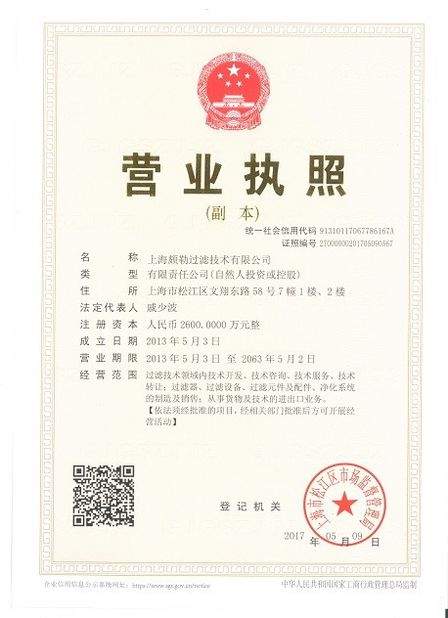
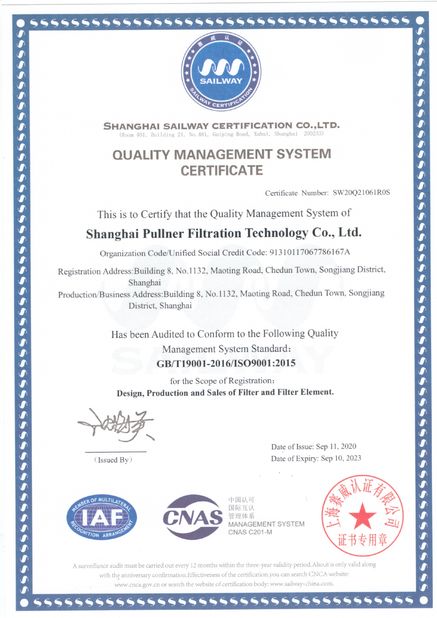
인증
중국 Shanghai Pullner Filtration Technology Co., Ltd. 인증
고객 검토
우리는 칠면조의 가장 큰 식품 공장 중 하나에서 필터를 사용합니다. 우리는 역삼투 전치 필터링으로 씁니다, 당신의 제품에 매우 만족합니다, 미스 루시가 상당히 우리를 도왔고 매우 빠른 반환을 우리의 문제에게 제공했습니다. 우리는 루마니아에서 신설 공장에서 그것을 사용할 것입니다, 내가 물어보세요 우리의 고객들에게 또한 그것을 추천합니다.

—— 호세

PULLNER는 좋은 동업자입니다. 알맞은 가격, 제일 서비스를 가진 좋은 제품, 우리는 5년 이상 협력했습니다.

—— nisa

저희 시설에서는 Pullner의 PP 캡슐 필터를 사전 필터로 상류에 설치했습니다. 이는 안정적인 여과를 제공하고, 후속 공정 부하를 줄이며, RO 작동을 원활하게 지원합니다. 또한 Miss Lucy의 신속한 의사소통과 문제 해결 능력에 감사드립니다. 덕분에 전체 과정이 수월했습니다. 이 제품을 계속 사용하고 인도 고객에게 추천할 것입니다.

—— Shubh

풀너의 높은 흐름 필터 카트리지는 좋은 품질을 가지고, 우리는 그들을 많이 사용하고 주로 발전소 물 필터링에 적용됩니다. 카트리지는 강한 기계적 강도와 신뢰할 수있는 성능을 보여줍니다.우리는 앞으로도 풀너와 함께 일할 것입니다.

—— 토마스 랄

저희는 풀너 팀과 3년 동안 협력해 왔습니다. 저희 회사는 수처리용으로 풀너 고유량 필터 카트리지와 스트링 와운드 필터 카트리지를 사용하고 있으며, 매우 좋은 필터입니다.

—— 알렉스 렐

저는 풀너 필터를 1년 동안 사용하다가 풀너 회사에서 만났습니다. 우리는 앞으로도 계속 일할 것이다

—— 리달 필러

제가 지금 온라인 채팅 해요
회사 뉴스
Surface Filtration vs. Depth Filtration: Why Filter Structure Changes Real Filtration Performance
에 대한 최신 회사 뉴스 Surface Filtration vs. Depth Filtration: Why Filter Structure Changes Real Filtration Performance
Surface Filtration vs. Depth Filtration: Why Filter Structure Changes Real Filtration Performance
Two 10-Micron Filter Cartridges Can Behave Very Differently

When selecting an industrial filter cartridge, users often compare micron rating, material, length, and price. However, one important factor is frequently overlooked: how the filter captures particles.

A 10 μm pleated cartridge and a 10 μm melt-blown cartridge may have the same nominal filtration rating, but their internal structures and particle-retention mechanisms are completely different.

This is the basic difference between surface filtration and depth filtration.

Understanding this distinction helps explain why some cartridges provide high dirt-holding capacity, while others offer more precise particle retention and easier performance control.

What Is Surface Filtration?

Surface filtration mainly captures particles on or very close to the surface of the filter media.

Pleated membrane cartridges, stainless-steel mesh cartridges, and some high-efficiency synthetic media filters are typical examples.

Imagine a screen with carefully controlled openings. Particles larger than the effective pore size are retained on the surface, while smaller particles pass through.

In practice, industrial surface filters are more sophisticated than a simple screen, but the basic principle is similar.

Because contaminants accumulate mainly on the media surface, surface filtration usually provides a relatively sharp particle cut-off and predictable filtration efficiency.

This makes it useful when the process requires consistent particle control.

What Is Depth Filtration?

Depth filtration captures contaminants throughout the thickness of the filter media rather than only on the outer surface.

Melt-blown polypropylene cartridges, string-wound cartridges, and many fibrous filter elements operate primarily as depth filters.

Their media contains a complex network of pathways. As the liquid flows through the cartridge, particles are trapped at different locations inside the media.

Larger particles may be captured near the outer layers, while smaller particles penetrate deeper before being retained.

This three-dimensional dirt-loading mechanism allows depth filters to hold substantial amounts of contamination.

A Practical Example: Well Water Pretreatment

Consider a factory using well water containing sand, rust, clay, and fine suspended solids.

If a high-precision pleated surface filter is installed directly as the first filtration stage, large amounts of sediment may quickly cover the media surface.

The pressure drop could rise rapidly, resulting in frequent cartridge replacement.

A depth filter may be more suitable as the first stage because particles can be distributed throughout the thickness of the media.

For example, a graded-density melt-blown cartridge may have relatively large pores in the outer layers and progressively smaller pores toward the inner core.

The larger particles are captured first, while finer particles are retained deeper inside the cartridge.

This improves dirt-holding capacity and can extend service life.

A Different Example: Final Filtration Before Filling

Now consider a beverage production line where water has already passed through multimedia filtration, activated carbon, and several pretreatment stages.

At this point, the contaminant concentration is relatively low, but the manufacturer wants reliable removal of fine particles before filling.

A pleated cartridge may be a better choice because the process requires consistent filtration efficiency rather than maximum dirt-loading capacity.

For example, a 1 μm or 0.45 μm pleated cartridge can provide a more defined filtration performance than a coarse depth filter.

The objective is no longer to handle large amounts of sediment. The objective is to control the size of particles entering the downstream process.

Why Depth Filters Often Have Higher Dirt-Holding Capacity

Suppose a filter media has a thickness of several millimeters.

With surface filtration, much of the contamination accumulates near the upstream surface. Once that surface becomes blocked, pressure drop rises quickly.

With depth filtration, particles can be distributed through a much larger volume of media.

This gives the cartridge more internal space to retain contaminants before flow resistance becomes excessive.

For water containing variable or relatively high particle loads, this can be a major advantage.

However, higher dirt-holding capacity does not automatically mean better filtration precision.

That is why the filter structure must match the application.

Pleated Cartridges Can Offer Much More Filtration Area

One advantage of pleated surface filters is their large effective filtration area.

A flat sheet of filter media is folded into many pleats and packed inside the cartridge.

A standard 10-inch pleated cartridge may contain a filtration area many times larger than its external cylindrical surface area.

The larger area reduces the flow velocity through each section of the media and helps control clean differential pressure.

However, more pleats are not always better.

If pleats are packed too tightly, liquid may not flow effectively between them. Parts of the filter media can become hydraulically inactive, meaning the theoretical filtration area is larger than the actual usable area.

Good cartridge design requires proper pleat spacing, support layers, and flow distribution.

Why Prefiltration Often Uses Both Technologies

Many well-designed filtration systems combine depth and surface filtration.

For example:

  • Stage 1: 20 μm melt-blown depth cartridge
  • Stage 2: 5 μm melt-blown or pleated cartridge
  • Stage 3: 1 μm pleated cartridge
  • Stage 4: 0.2 μm membrane cartridge for critical final filtration
Which Type Should You Choose?

Depth filtration is often suitable for applications with high or variable particle loading, general water pretreatment, sediment removal, and protection of downstream equipment.

Surface or pleated filtration is often preferred when consistent particle retention, low clean pressure drop, high filtration area, or defined filtration efficiency is important.

The best choice depends on contaminant characteristics, required micron rating, flow rate, differential pressure, filter cost, and downstream cleanliness requirements.

A filter cartridge should therefore be selected according to the complete filtration process, not simply by matching the micron number printed on the label.

Pullner Filter provides melt-blown depth cartridges, pleated filter cartridges, membrane cartridges, stainless-steel filter elements, and customized filtration solutions for industrial liquid filtration.

For filter cartridge selection, technical specifications, and industrial filtration solutions, visit pullnerfilter.com.

선술집 시간 : 2026-08-25 10:00:04 >> 뉴스 명부
연락처 세부 사항
Shanghai Pullner Filtration Technology Co., Ltd.

담당자: Miss. Lucy

전화 번호: 86-21-57718597

팩스: 86-021-57711314

회사에 직접 문의 보내기 (0 / 3000)