뉴스

회사 소식 How to Replace OEM Filter Cartridges Without Increasing Process Risk

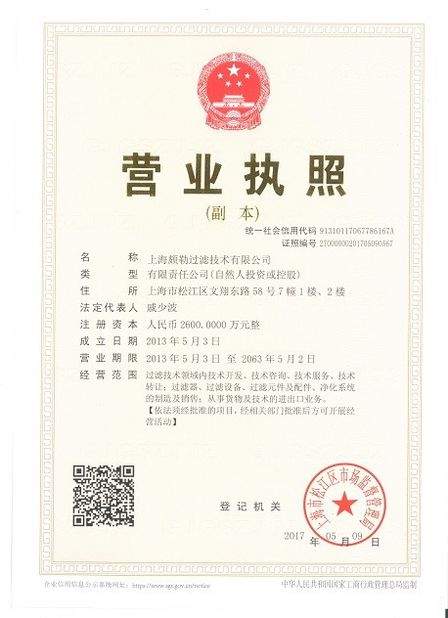
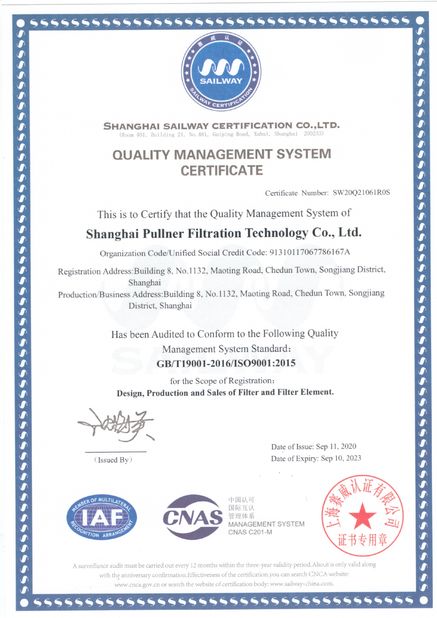
인증
중국 Shanghai Pullner Filtration Technology Co., Ltd. 인증
고객 검토
우리는 칠면조의 가장 큰 식품 공장 중 하나에서 필터를 사용합니다. 우리는 역삼투 전치 필터링으로 씁니다, 당신의 제품에 매우 만족합니다, 미스 루시가 상당히 우리를 도왔고 매우 빠른 반환을 우리의 문제에게 제공했습니다. 우리는 루마니아에서 신설 공장에서 그것을 사용할 것입니다, 내가 물어보세요 우리의 고객들에게 또한 그것을 추천합니다.

—— 호세

PULLNER는 좋은 동업자입니다. 알맞은 가격, 제일 서비스를 가진 좋은 제품, 우리는 5년 이상 협력했습니다.

—— nisa

저희 시설에서는 Pullner의 PP 캡슐 필터를 사전 필터로 상류에 설치했습니다. 이는 안정적인 여과를 제공하고, 후속 공정 부하를 줄이며, RO 작동을 원활하게 지원합니다. 또한 Miss Lucy의 신속한 의사소통과 문제 해결 능력에 감사드립니다. 덕분에 전체 과정이 수월했습니다. 이 제품을 계속 사용하고 인도 고객에게 추천할 것입니다.

—— Shubh

풀너의 높은 흐름 필터 카트리지는 좋은 품질을 가지고, 우리는 그들을 많이 사용하고 주로 발전소 물 필터링에 적용됩니다. 카트리지는 강한 기계적 강도와 신뢰할 수있는 성능을 보여줍니다.우리는 앞으로도 풀너와 함께 일할 것입니다.

—— 토마스 랄

저희는 풀너 팀과 3년 동안 협력해 왔습니다. 저희 회사는 수처리용으로 풀너 고유량 필터 카트리지와 스트링 와운드 필터 카트리지를 사용하고 있으며, 매우 좋은 필터입니다.

—— 알렉스 렐

저는 풀너 필터를 1년 동안 사용하다가 풀너 회사에서 만났습니다. 우리는 앞으로도 계속 일할 것이다

—— 리달 필러

제가 지금 온라인 채팅 해요
회사 뉴스
How to Replace OEM Filter Cartridges Without Increasing Process Risk
에 대한 최신 회사 뉴스 How to Replace OEM Filter Cartridges Without Increasing Process Risk

How to Replace OEM Filter Cartridges Without Increasing Process Risk

Replacing an OEM filter cartridge can significantly reduce filtration costs and improve supply flexibility, especially in industries where large quantities of cartridges are consumed every year.

However, an OEM replacement should never be evaluated only by dimensions or price.

In critical applications such as petrochemical processing, power generation, pharmaceuticals, chemicals, food and beverage, and high-purity water treatment, an unsuitable replacement cartridge may cause higher differential pressure, reduced filtration efficiency, shorter service life, leakage, or even downstream process contamination.

A successful OEM replacement therefore requires a structured technical qualification process.

Why OEM Filter Replacement Can Be Risky

Many filter cartridges appear simple from the outside. Two cartridges may have the same length, diameter, micron rating, and end-cap configuration, but their actual filtration performance can be very different.

The difference may come from filter media, pore structure, pleat density, support layers, sealing materials, cartridge construction, or manufacturing tolerances.

For example, replacing a 5 μm OEM cartridge with another cartridge labeled “5 μm" does not automatically mean that both products provide the same particle retention performance.

One may be rated nominally while the other may be designed to achieve a much higher absolute retention efficiency.

This is why OEM replacement should begin with technical equivalence rather than simple dimensional matching.

1. Confirm the Original Cartridge Specification

The first step is to collect as much information as possible about the existing cartridge.

Important parameters normally include:

  • cartridge length and outer diameter
  • inner diameter and connection type
  • end-cap configuration
  • gasket or O-ring material
  • filter media
  • micron rating
  • nominal or absolute filtration efficiency
  • operating temperature
  • maximum differential pressure
  • design flow rate
  • process fluid
  • existing filter housing model

If the original part number is available, it can help identify the basic configuration.

However, an OEM part number alone is not always sufficient. In many industrial projects, the actual process conditions are more important than the catalogue specification.

2. Understand the Actual Process Conditions

A replacement cartridge should be selected for the operating system, not only for the original filter model.

Before recommending an alternative, the supplier should understand how the cartridge is actually being used.

For example, a cartridge installed in room-temperature RO pre-filtration has very different requirements from one used in hot process water, aggressive solvents, high-viscosity oil, or high-purity chemical filtration.

Key operating data normally include:

Operating temperature:
Some polymer cartridges may soften, deform, or lose mechanical strength at elevated temperatures.

Flow rate:
Excessive flow through an undersized cartridge can create high differential pressure and shorten service life.

Operating pressure and differential pressure:
The internal support structure must withstand the mechanical stress generated during operation.

Chemical compatibility:
Filter media, support materials, end caps, and seals must all be compatible with the process fluid.

Contaminant loading:
The quantity and type of particles strongly influence filtration area and cartridge life.

Without this information, a physically compatible cartridge may still perform poorly after installation.

3. Compare Filter Media, Not Just Micron Rating

Filter media is one of the most important factors in OEM replacement.

Common cartridge materials include polypropylene, PES, PTFE, PVDF, nylon, glass fiber, and stainless steel.

Even when two cartridges use the same basic material, their performance may differ because of membrane structure, fiber diameter, pore distribution, pleat configuration, and supporting layers.

For critical applications, the comparison should include filtration efficiency as well as micron rating.

For example, a nominal 1 μm polypropylene cartridge and an absolute 1 μm membrane cartridge cannot be treated as technically equivalent simply because both are marked “1 μm".

The required efficiency should therefore be confirmed before replacement.

4. Check Mechanical and Dimensional Compatibility

A replacement cartridge must fit the existing housing correctly.

Important dimensional details include cartridge length, outer diameter, inner diameter, sealing position, end-cap design, and adapter geometry.

For cartridges using 222, 226, fin, spear, DOE, or proprietary interfaces, even a small dimensional difference may prevent correct installation or sealing.

In OEM replacement projects, dimensional drawings are often more useful than catalogue descriptions.

When possible, the replacement supplier should compare the original sample or drawing directly with the proposed cartridge before production.

5. Evaluate Differential Pressure and Flow Performance

A cartridge that fits the housing does not necessarily provide the same hydraulic performance.

Pleat quantity, filtration area, media permeability, cartridge diameter, and support structure all affect flow resistance.

If the replacement cartridge has significantly higher initial differential pressure, the system may experience reduced flow or shorter service intervals.

For high-flow applications, the supplier should therefore evaluate both the required flow rate and acceptable differential pressure.

This is particularly important when replacing large-format cartridges used in power plants, petrochemical plants, desalination systems, and industrial water treatment.

6. Start With Samples or a Controlled Trial

For critical applications, moving directly from technical comparison to a full-volume purchase creates unnecessary risk.

A safer approach is to begin with a small quantity for qualification.

Depending on the application, the customer may evaluate:

  • installation and sealing
  • initial differential pressure
  • flow performance
  • filtration quality
  • contaminant holding capacity
  • cartridge integrity
  • service life

For process-critical filtration, a longer field trial may be required before full approval.

The purpose of the trial is not only to prove that the cartridge can operate. It is to confirm that its performance remains stable over the expected service cycle.

7. Compare Total Filtration Cost, Not Only Unit Price

OEM replacement projects are often initiated because of high cartridge prices, but the lowest-priced alternative is not always the lowest-cost solution.

A more useful comparison considers total filtration cost.

This includes:

  • cartridge purchase price
  • replacement frequency
  • maintenance labor
  • equipment downtime
  • disposal cost
  • inventory requirement
  • emergency replacement risk

A cartridge that costs 20% less but lasts only half as long may increase total operating cost.

A successful OEM replacement should reduce cost while maintaining or improving filtration performance and service life.

8. Move to Batch Replacement Only After Qualification

Once the sample or field trial has confirmed compatibility, filtration efficiency, pressure behavior, and service life, the customer can gradually move to regular procurement.

For large industrial users, this staged qualification process is particularly important.

It reduces technical risk while giving engineering and procurement teams enough operating data to support supplier approval.

In many cases, the final result is not only a lower cartridge price, but also a more flexible supply chain, shorter lead time, and less dependence on a single OEM source.

A Good OEM Replacement Is an Engineering Project

Replacing an OEM filter cartridge should not be treated as a simple purchasing decision.

The safest approach is to combine dimensional matching, media comparison, process-condition analysis, laboratory verification, and field testing before large-scale replacement.

At Pullner, OEM replacement projects are evaluated based on the actual filtration system and operating conditions. Depending on the application, support may include original cartridge analysis, dimensional matching, customized cartridge development, sample testing, and field qualification.

The objective is simple: reduce filtration cost without introducing additional process risk.

For industrial users with high cartridge consumption or specialized OEM filter requirements, a properly qualified replacement can provide long-term savings while maintaining stable filtration performance.

선술집 시간 : 2026-09-10 14:46:30 >> 뉴스 명부
연락처 세부 사항
Shanghai Pullner Filtration Technology Co., Ltd.

담당자: Miss. Lucy

전화 번호: 86-21-57718597

팩스: 86-021-57711314

회사에 직접 문의 보내기 (0 / 3000)